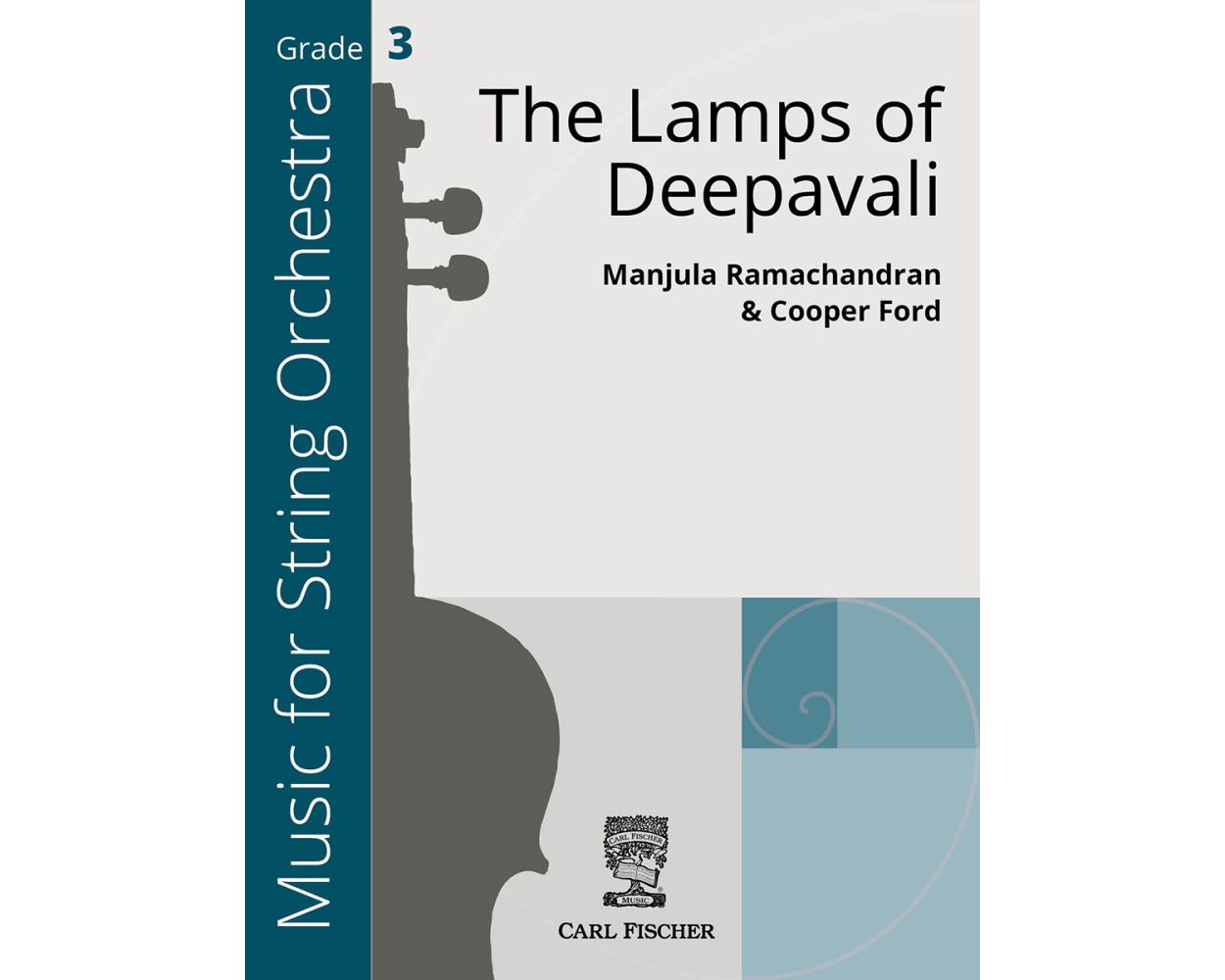
The Lamps of Deepavali (deepa meaning lamp and oli meaning light) commemorates one of the most important holidays in South Indian culture. The fall festival celebrating light over darkness is also known as Diwali, its North Indian counterpart. This piece is written in Sindhubhairavi, a raaga common in both the Carnatic and Hindustani (Bhairavi) musical traditions of India. The notes of this raaga are often associated with devotion and positivity.
The Lamps of Deepavali (deepa meaning lamp and oli meaning light) commemorates one of the most important holidays in South Indian culture. The fall festival celebrating light over darkness is also known as Diwali, its North Indian counterpart. This piece is written in Sindhubhairavi, a raaga common in both the Carnatic and Hindustani (Bhairavi) musical traditions of India. The notes of this raaga are often associated with devotion and positivity.
The Lamps of Deepavali (deepa meaning lamp and oli meaning light) commemorates one of the most important holidays in South Indian culture. The fall festival celebrating light over darkness is also known as Diwali, its North Indian counterpart. This piece is written in Sindhubhairavi, a raaga common in both the Carnatic and Hindustani (Bhairavi) musical traditions of India. The notes of this raaga are often associated with devotion and positivity.
The Lamps of Deepavali (deepa meaning lamp and oli meaning light) commemorates one of the most important holidays in South Indian culture. The fall festival celebrating light over darkness is also known as Diwali, its North Indian counterpart. This piece is written in Sindhubhairavi, a raaga common in both the Carnatic and Hindustani (Bhairavi) musical traditions of India. The notes of this raaga are often associated with devotion and positivity.