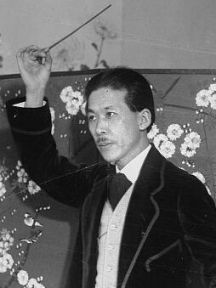
Kōsaku Yamada (1886–1965) was a pioneering Japanese composer and conductor, widely regarded as a central figure in introducing Western classical music to Japan while helping to shape a distinctly modern Japanese musical voice. Born in Tokyo, he studied at the Tokyo Music School before continuing his education in Berlin under Max Bruch. This European training deeply influenced his style, and he became one of the first Japanese composers to write large-scale Western forms, including symphonies and operas. His Symphony in F major, “Triumph and Peace” (1912), is often cited as one of the earliest full-scale symphonies by a Japanese composer.
After returning to Japan, Yamada played a crucial role as both composer and conductor, founding orchestras and serving as a leading advocate for Western repertoire, including works by composers such as Claude Debussy and Antonín Dvořák. He also spent time in the United States, conducting in New York and helping to establish an international presence for Japanese music. His own compositions often sought to blend Western orchestral techniques with Japanese musical elements, as heard in works such as Inno Meiji (1921) and the Nagauta Symphony (1934), which incorporate traditional instruments and idioms.
Yamada was a prolific composer, producing approximately 1,600 works, including around 700 art songs; among his best-known pieces is the beloved Akatombo (Red Dragonfly). His opera Kurofune (Black Ships) remains one of the most significant early Japanese operas. Beyond composition, he was instrumental in building Japan’s orchestral culture and served in prominent cultural roles later in life. Today, Yamada is remembered as a foundational figure in Japanese classical music, bridging Eastern and Western traditions and laying the groundwork for future generations of composers.