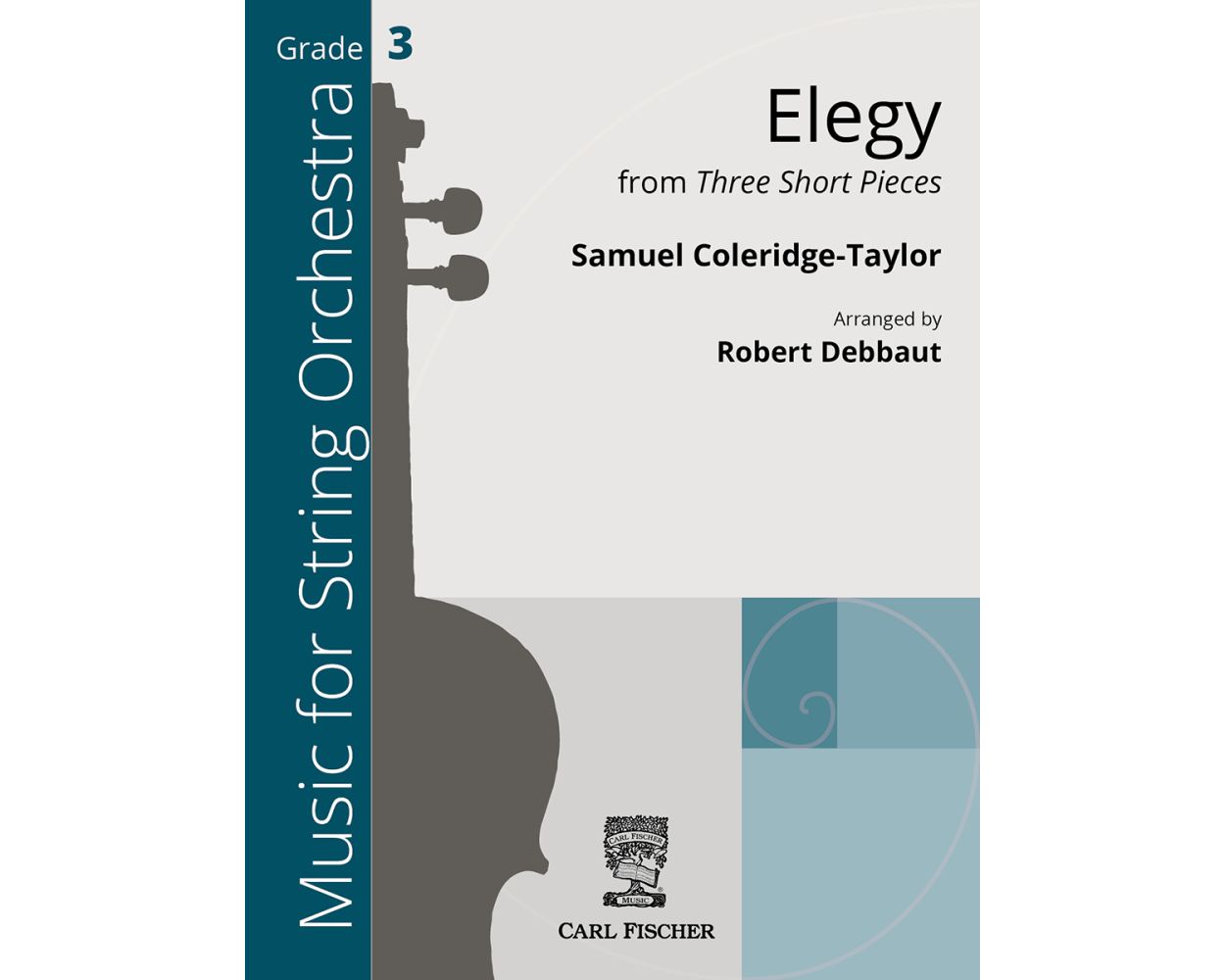
First appearing in Novello’s Album for the Organ, No. 3, this plaintive Elegy dates from 1898, the same year as Samuel Coleridge-Taylor’s Opus 33 Ballade for Orchestra and his Opus 30 cantata Song of Hiawatha. The simple lyricism of the expressive melody in G minor is both heartfelt and melancholy.
First appearing in Novello’s Album for the Organ, No. 3, this plaintive Elegy dates from 1898, the same year as Samuel Coleridge-Taylor’s Opus 33 Ballade for Orchestra and his Opus 30 cantata Song of Hiawatha. The simple lyricism of the expressive melody in G minor is both heartfelt and melancholy.
First appearing in Novello’s Album for the Organ, No. 3, this plaintive Elegy dates from 1898, the same year as Samuel Coleridge-Taylor’s Opus 33 Ballade for Orchestra and his Opus 30 cantata Song of Hiawatha. The simple lyricism of the expressive melody in G minor is both heartfelt and melancholy.
First appearing in Novello’s Album for the Organ, No. 3, this plaintive Elegy dates from 1898, the same year as Samuel Coleridge-Taylor’s Opus 33 Ballade for Orchestra and his Opus 30 cantata Song of Hiawatha. The simple lyricism of the expressive melody in G minor is both heartfelt and melancholy.
First appearing in Novello’s Album for the Organ, No. 3, this plaintive Elegy dates from 1898, the same year as Samuel Coleridge-Taylor’s Opus 33 Ballade for Orchestra and his Opus 30 cantata Song of Hiawatha. The simple lyricism of the expressive melody in G minor is both heartfelt and melancholy.