The store will not work correctly when cookies are disabled.
We use cookies to make your experience better.To comply with the new e-Privacy directive, we need to ask for your consent to set the cookies. Learn more.
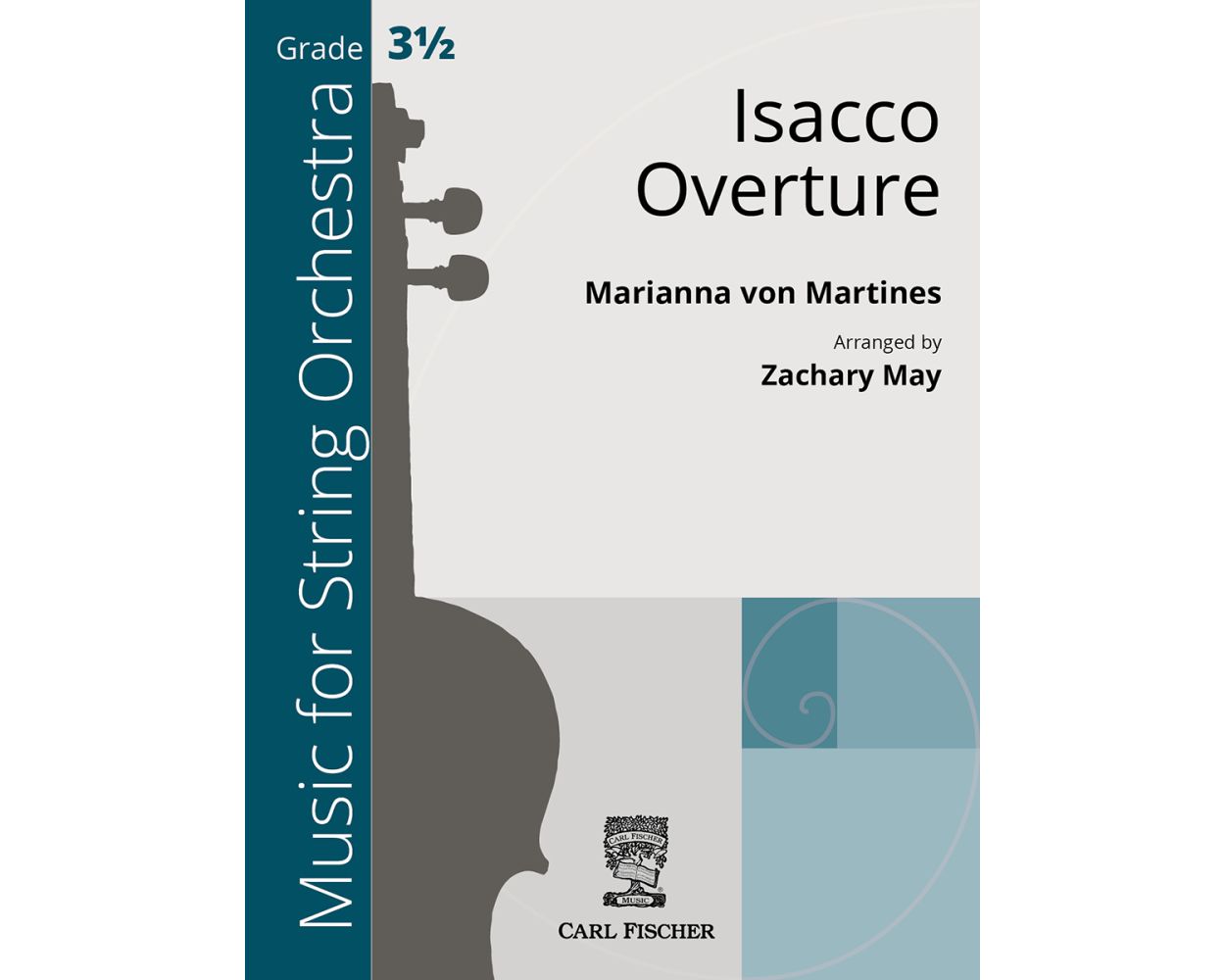
Marianne von Martínez (1744-1812) was an accomplished Viennese composer, harpsichordist, and vocalist. Her output included keyboard sonatas and concertos, motets, masses, cantatas, and oratorios including Isacco Figura del Reddentore (1782). This allegro is the first of three sections of the oratorio’s overture. It features buoyant interplay of the violin sections, compelling harmonic development in the low strings, and hooked and spiccato bowings characteristic of the classical era. The optional timpani part adds brilliance, power, and authenticity to the arrangement, making this an excellent program opener or closer.
Marianne von Martínez (1744-1812) was an accomplished Viennese composer, harpsichordist, and vocalist. Her output included keyboard sonatas and concertos, motets, masses, cantatas, and oratorios including Isacco Figura del Reddentore (1782). This allegro is the first of three sections of the oratorio’s overture. It features buoyant interplay of the violin sections, compelling harmonic development in the low strings, and hooked and spiccato bowings characteristic of the classical era. The optional timpani part adds brilliance, power, and authenticity to the arrangement, making this an excellent program opener or closer.
Marianne von Martínez (1744-1812) was an accomplished Viennese composer, harpsichordist, and vocalist. Her output included keyboard sonatas and concertos, motets, masses, cantatas, and oratorios including Isacco Figura del Reddentore (1782). This allegro is the first of three sections of the oratorio’s overture. It features buoyant interplay of the violin sections, compelling harmonic development in the low strings, and hooked and spiccato bowings characteristic of the classical era. The optional timpani part adds brilliance, power, and authenticity to the arrangement, making this an excellent program opener or closer.
Marianne von Martínez (1744-1812) was an accomplished Viennese composer, harpsichordist, and vocalist. Her output included keyboard sonatas and concertos, motets, masses, cantatas, and oratorios including Isacco Figura del Reddentore (1782). This allegro is the first of three sections of the oratorio’s overture. It features buoyant interplay of the violin sections, compelling harmonic development in the low strings, and hooked and spiccato bowings characteristic of the classical era. The optional timpani part adds brilliance, power, and authenticity to the arrangement, making this an excellent program opener or closer.
Marianne von Martínez (1744-1812) was an accomplished Viennese composer, harpsichordist, and vocalist. Her output included keyboard sonatas and concertos, motets, masses, cantatas, and oratorios including Isacco Figura del Reddentore (1782). This allegro is the first of three sections of the oratorio’s overture. It features buoyant interplay of the violin sections, compelling harmonic development in the low strings, and hooked and spiccato bowings characteristic of the classical era. The optional timpani part adds brilliance, power, and authenticity to the arrangement, making this an excellent program opener or closer.
Marianne von Martínez (1744-1812) was an accomplished Viennese composer, harpsichordist, and vocalist. Her output included keyboard sonatas and concertos, motets, masses, cantatas, and oratorios including Isacco Figura del Reddentore (1782). This allegro is the first of three sections of the oratorio’s overture. It features buoyant interplay of the violin sections, compelling harmonic development in the low strings, and hooked and spiccato bowings characteristic of the classical era. The optional timpani part adds brilliance, power, and authenticity to the arrangement, making this an excellent program opener or closer.
Marianne von Martínez (1744-1812) was an accomplished Viennese composer, harpsichordist, and vocalist. Her output included keyboard sonatas and concertos, motets, masses, cantatas, and oratorios including Isacco Figura del Reddentore (1782). This allegro is the first of three sections of the oratorio’s overture. It features buoyant interplay of the violin sections, compelling harmonic development in the low strings, and hooked and spiccato bowings characteristic of the classical era. The optional timpani part adds brilliance, power, and authenticity to the arrangement, making this an excellent program opener or closer.