The store will not work correctly when cookies are disabled.
We use cookies to make your experience better.To comply with the new e-Privacy directive, we need to ask for your consent to set the cookies. Learn more.
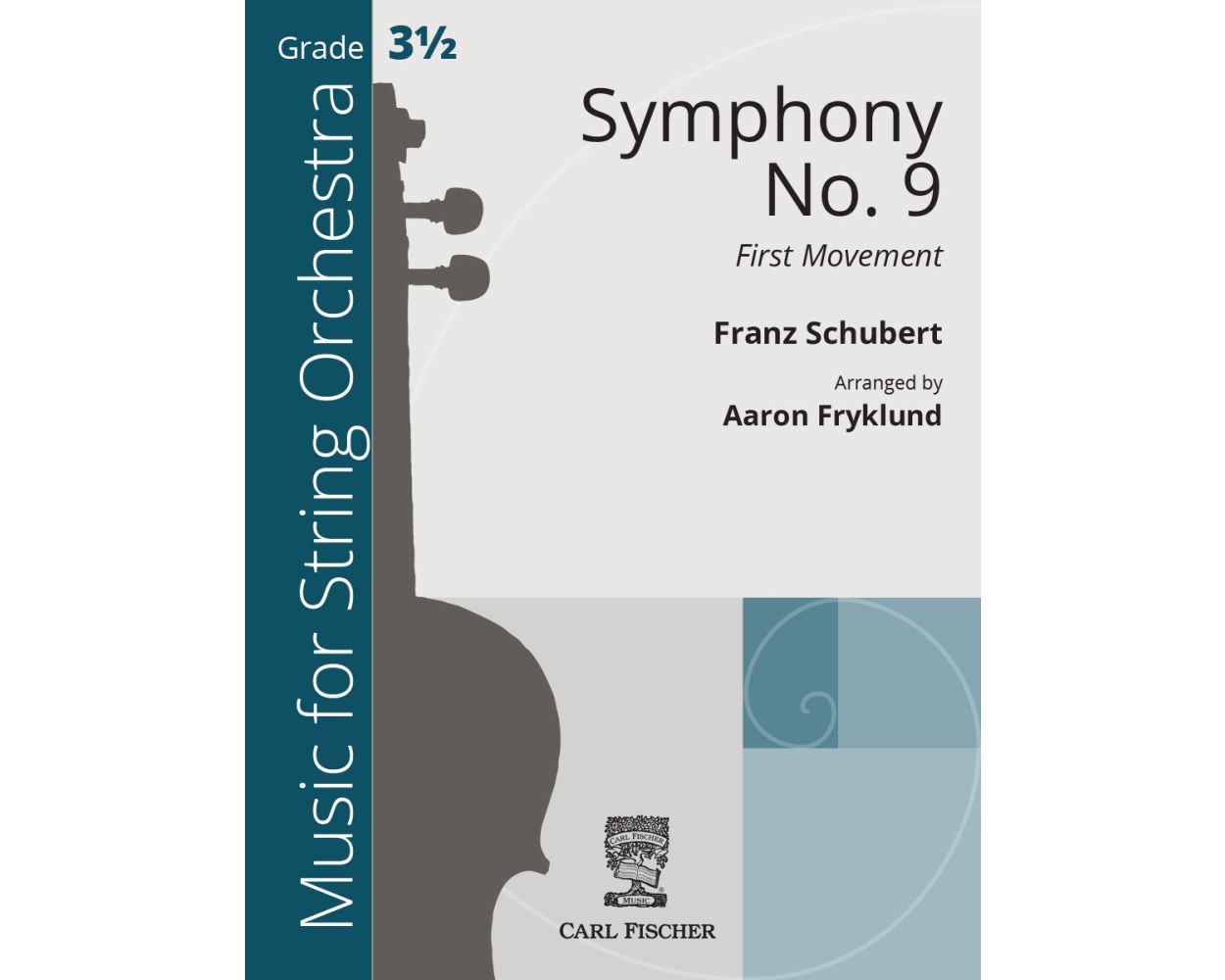
Franz Schubert's ninth symphony was known as "The Great" C major symphony, and this string orchestra arrangement remains faithful to the original, yet accessible with minimal shifting. From the first downbeat of the energetic Allegro ma non troppo, brisk momentum maintains a steady gallop that oscillates between triple and duple rhythms, often building in ebullient rising scales. Portions of the original development are included, as well as a grand return to a restatement of the Andante theme at the end.
Franz Schubert's ninth symphony was known as "The Great" C major symphony, and this string orchestra arrangement remains faithful to the original, yet accessible with minimal shifting. From the first downbeat of the energetic Allegro ma non troppo, brisk momentum maintains a steady gallop that oscillates between triple and duple rhythms, often building in ebullient rising scales. Portions of the original development are included, as well as a grand return to a restatement of the Andante theme at the end.
Franz Schubert's ninth symphony was known as "The Great" C major symphony, and this string orchestra arrangement remains faithful to the original, yet accessible with minimal shifting. From the first downbeat of the energetic Allegro ma non troppo, brisk momentum maintains a steady gallop that oscillates between triple and duple rhythms, often building in ebullient rising scales. Portions of the original development are included, as well as a grand return to a restatement of the Andante theme at the end.
Franz Schubert's ninth symphony was known as "The Great" C major symphony, and this string orchestra arrangement remains faithful to the original, yet accessible with minimal shifting. From the first downbeat of the energetic Allegro ma non troppo, brisk momentum maintains a steady gallop that oscillates between triple and duple rhythms, often building in ebullient rising scales. Portions of the original development are included, as well as a grand return to a restatement of the Andante theme at the end.
Franz Schubert's ninth symphony was known as "The Great" C major symphony, and this string orchestra arrangement remains faithful to the original, yet accessible with minimal shifting. From the first downbeat of the energetic Allegro ma non troppo, brisk momentum maintains a steady gallop that oscillates between triple and duple rhythms, often building in ebullient rising scales. Portions of the original development are included, as well as a grand return to a restatement of the Andante theme at the end.
Franz Schubert's ninth symphony was known as "The Great" C major symphony, and this string orchestra arrangement remains faithful to the original, yet accessible with minimal shifting. From the first downbeat of the energetic Allegro ma non troppo, brisk momentum maintains a steady gallop that oscillates between triple and duple rhythms, often building in ebullient rising scales. Portions of the original development are included, as well as a grand return to a restatement of the Andante theme at the end.
Franz Schubert's ninth symphony was known as "The Great" C major symphony, and this string orchestra arrangement remains faithful to the original, yet accessible with minimal shifting. From the first downbeat of the energetic Allegro ma non troppo, brisk momentum maintains a steady gallop that oscillates between triple and duple rhythms, often building in ebullient rising scales. Portions of the original development are included, as well as a grand return to a restatement of the Andante theme at the end.
SKU: STR37 Ensemble: String Orchestra Grade: 3.5 Duration: 00:03:32 Key: C major Tempo: h = 124, h = 112 Publisher: Carl Fischer Music Product Type: Score and Parts Weight: 1.088 lbs. UPC: 798408102999 ISBN: 9798299500394