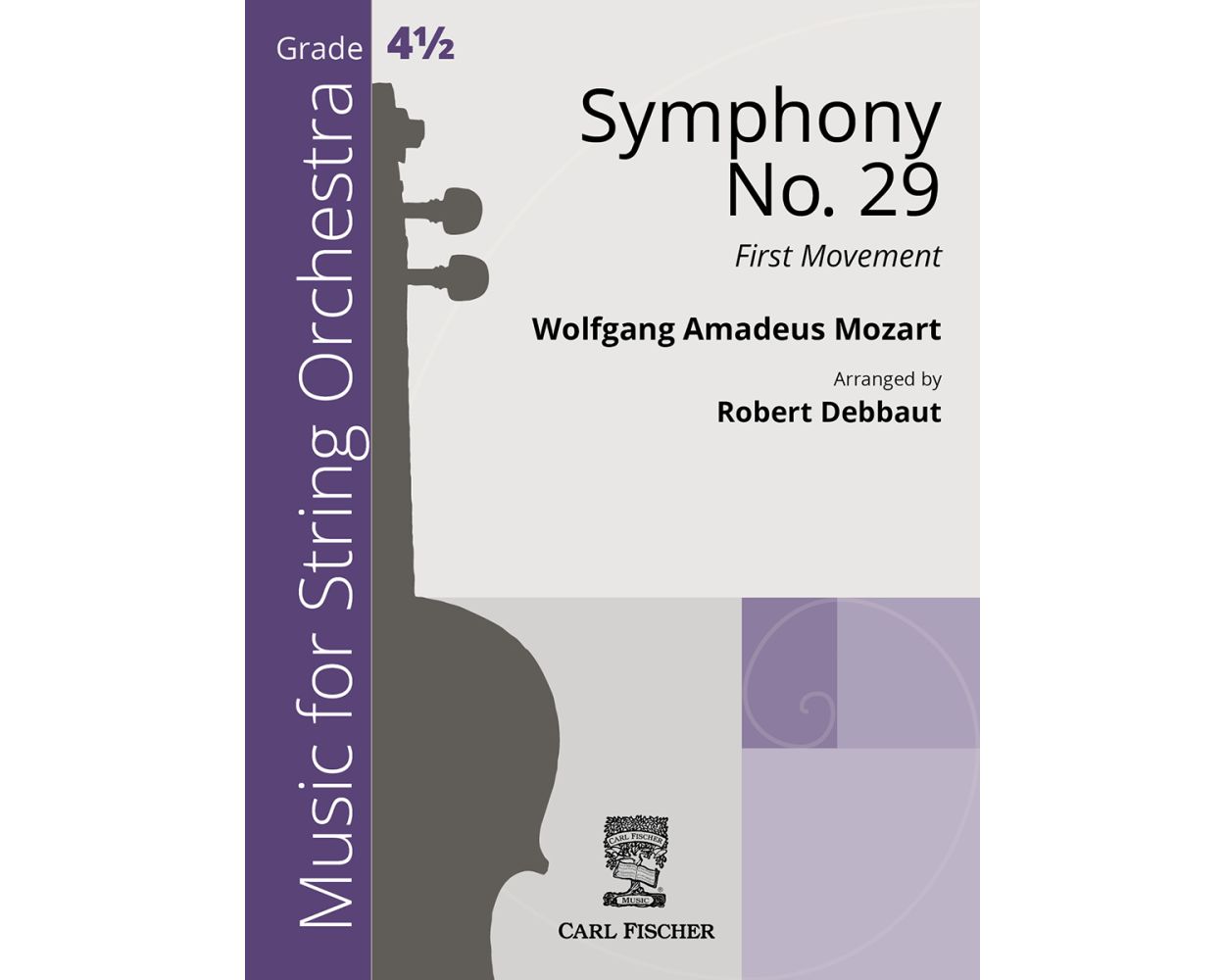
This first movement of Mozart’s Symphony No. 29 in A Major, K. 201, this lighthearted “Allegro moderato” follows the sonata form typical of his early symphonies. Its graceful, yet playful first theme features an octave drop consistent with Mozart’s often jocular approach to melody. In 1773 Mozart had just returned from a Viennese journey where he was introduced to the “sturm und drang” (storm and stress) compositional style of his future mentor, Franz Joseph Haydn. While this work certainly does bear some influence of Haydn, its original playful nature is pure Mozart.
This first movement of Mozart’s Symphony No. 29 in A Major, K. 201, this lighthearted “Allegro moderato” follows the sonata form typical of his early symphonies. Its graceful, yet playful first theme features an octave drop consistent with Mozart’s often jocular approach to melody. In 1773 Mozart had just returned from a Viennese journey where he was introduced to the “sturm und drang” (storm and stress) compositional style of his future mentor, Franz Joseph Haydn. While this work certainly does bear some influence of Haydn, its original playful nature is pure Mozart.
This first movement of Mozart’s Symphony No. 29 in A Major, K. 201, this lighthearted “Allegro moderato” follows the sonata form typical of his early symphonies. Its graceful, yet playful first theme features an octave drop consistent with Mozart’s often jocular approach to melody. In 1773 Mozart had just returned from a Viennese journey where he was introduced to the “sturm und drang” (storm and stress) compositional style of his future mentor, Franz Joseph Haydn. While this work certainly does bear some influence of Haydn, its original playful nature is pure Mozart.
This first movement of Mozart’s Symphony No. 29 in A Major, K. 201, this lighthearted “Allegro moderato” follows the sonata form typical of his early symphonies. Its graceful, yet playful first theme features an octave drop consistent with Mozart’s often jocular approach to melody. In 1773 Mozart had just returned from a Viennese journey where he was introduced to the “sturm und drang” (storm and stress) compositional style of his future mentor, Franz Joseph Haydn. While this work certainly does bear some influence of Haydn, its original playful nature is pure Mozart.
This first movement of Mozart’s Symphony No. 29 in A Major, K. 201, this lighthearted “Allegro moderato” follows the sonata form typical of his early symphonies. Its graceful, yet playful first theme features an octave drop consistent with Mozart’s often jocular approach to melody. In 1773 Mozart had just returned from a Viennese journey where he was introduced to the “sturm und drang” (storm and stress) compositional style of his future mentor, Franz Joseph Haydn. While this work certainly does bear some influence of Haydn, its original playful nature is pure Mozart.