The store will not work correctly when cookies are disabled.
We use cookies to make your experience better.To comply with the new e-Privacy directive, we need to ask for your consent to set the cookies. Learn more.
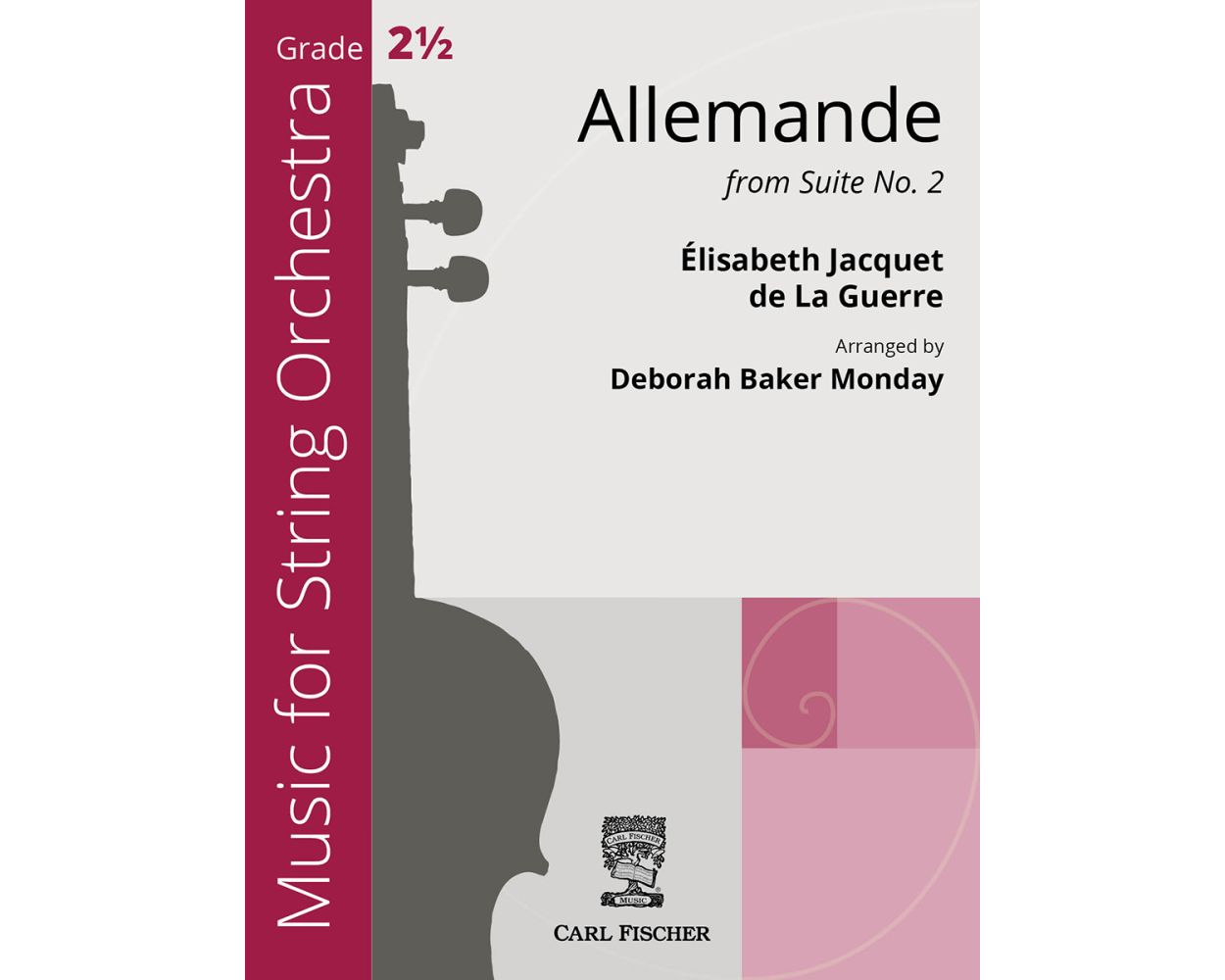
The daughter of a French harpsichord maker, Élisabeth Jacquet de La Guerre first learned to play under her father’s tutelage. At a young age, she was brought into the court of King Louis as a musician. Élisabeth taught, composed, and performed throughout Paris - a rare accomplishment for a woman at that time. This Allemande from her Suite No. 2 features the elegant style of the period. Originally highly ornamented, this arrangement has been simplified so that developing players may experience the music of this historically important composer.
The daughter of a French harpsichord maker, Élisabeth Jacquet de La Guerre first learned to play under her father’s tutelage. At a young age, she was brought into the court of King Louis as a musician. Élisabeth taught, composed, and performed throughout Paris - a rare accomplishment for a woman at that time. This Allemande from her Suite No. 2 features the elegant style of the period. Originally highly ornamented, this arrangement has been simplified so that developing players may experience the music of this historically important composer.
The daughter of a French harpsichord maker, Élisabeth Jacquet de La Guerre first learned to play under her father’s tutelage. At a young age, she was brought into the court of King Louis as a musician. Élisabeth taught, composed, and performed throughout Paris - a rare accomplishment for a woman at that time. This Allemande from her Suite No. 2 features the elegant style of the period. Originally highly ornamented, this arrangement has been simplified so that developing players may experience the music of this historically important composer.
The daughter of a French harpsichord maker, Élisabeth Jacquet de La Guerre first learned to play under her father’s tutelage. At a young age, she was brought into the court of King Louis as a musician. Élisabeth taught, composed, and performed throughout Paris - a rare accomplishment for a woman at that time. This Allemande from her Suite No. 2 features the elegant style of the period. Originally highly ornamented, this arrangement has been simplified so that developing players may experience the music of this historically important composer.